In today’s fast-paced eCommerce environment, businesses face growing challenges as they scale product portfolios and channel offerings. One of the most pressing issues is product complexity, which often leads to inefficiencies, higher costs and dissatisfied customers. In this article we’ll explore how you can master product complexity in eCommerce by deploying a centralized smart board — a collaborative visual management tool that brings clarity, alignment and control. Along the way we’ll highlight why product complexity matters, how a smart board becomes the hub for control, and actionable steps you can take.
Why Product Complexity Matters in eCommerce
First of all, let’s define product complexity: it refers to the number of individual parts or features that make up a product — including its functions, manufacturing, configuration and marketing. Furthermore, complexity in a commerce setting also arises from omnichannel demands, multiple platforms, and the need to provide consistent product information across touchpoints.
Because of this, product complexity in eCommerce can:
- Increase cart abandonment when customers cannot make sense of configurable or feature-rich items.
- Raise internal costs of maintenance, data management and supply chain overhead.
- Delay time-to-market and reduce flexibility across product lines.
Therefore, mastering product complexity becomes a strategic necessity — not just a “nice to have”.
Key Steps to Master Product Complexity in eCommerce Using a Smart Board
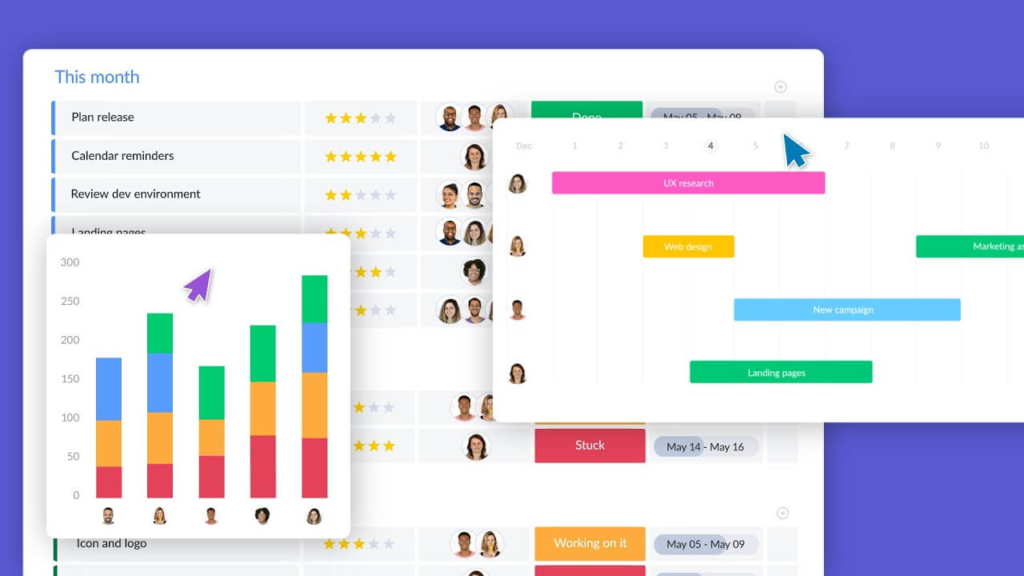
A centralized smart board in this context refers to a digital or physical collaborative interface where all relevant stakeholders (product managers, marketing, supply chain, data teams) can see, track and act upon product complexity indicators, workflows, decisions and resolutions — in one unified place.
Why it helps:
- It aligns cross-functional teams around a single version of truth.
- It surfaces complexity hotspots early (e.g., too many feature options, duplicate parts, overlapping platforms).
- It enables decision-making based on visual data, reducing reliance on disparate spreadsheets or silos.
- It facilitates continuous monitoring and adjustment of product complexity, rather than reactive firefighting.
In essence, by using a centralized smart board you can tame product complexity in eCommerce — improving both internal operations and external customer experience.
Key Steps to Master Product Complexity in eCommerce Using a Smart Board
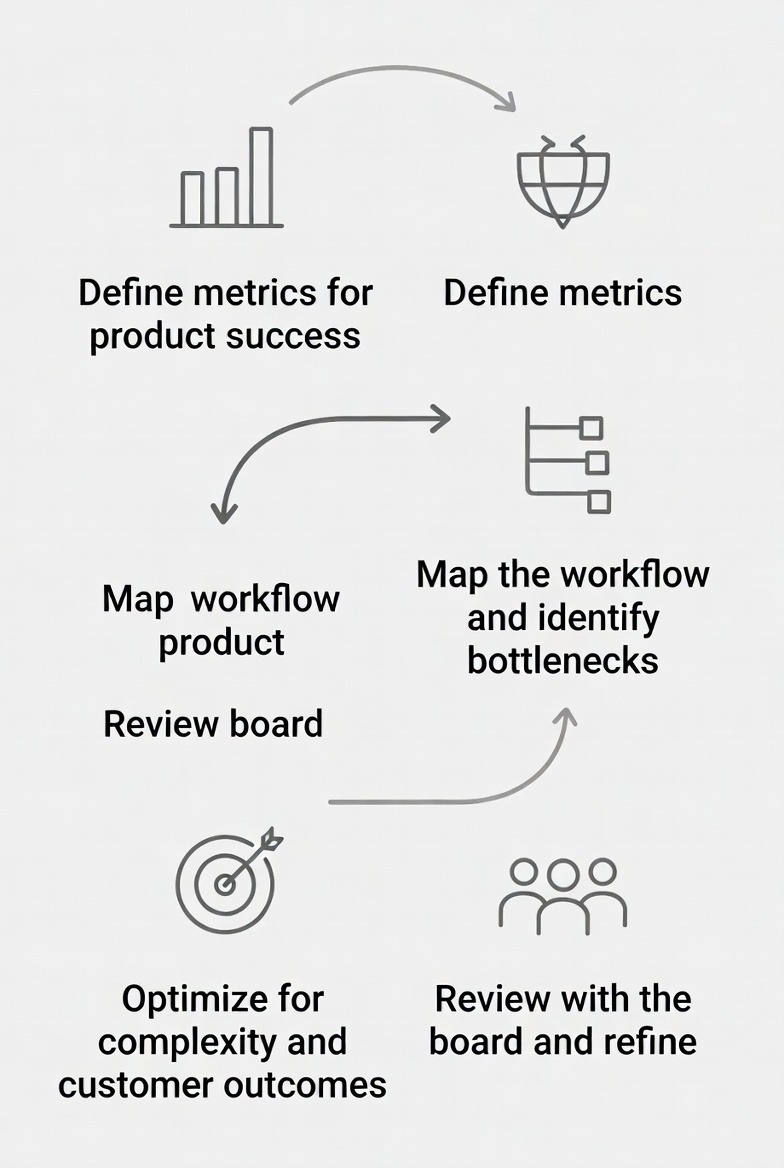
Below are actionable steps to deploy this method and ensure you are truly mastering product complexity in your eCommerce business:
1. Define Your Complexity Metrics
Start by agreeing on what “product complexity” means for your business. For example:
- Number of unique parts or SKUs in a product family.
- Number of configurable options per product.
- Number of channels or marketplaces each product must support.
- Data inconsistencies or missing attributes across product listings.
Document those metrics and feed them into your smart board.
2. Map Out the Workflow & Stakeholders
Next, identify who is involved (engineering/product design, eCommerce content, supply chain, marketing). Then define the workflow: what triggers a complexity review? When does the board get updated? Who owns what? Because without clarity, your board becomes just another dashboard — not a decision-making hub.
3. Populate the Smart Board
Use a visual board (Kanban, timeline, dashboard) where you list each product line or configuration, its complexity score, the status of review/optimization, and responsible owner. For instance, you might have columns such as “Under Review”, “Optimization in Progress”, “Complexity Reduced”, “Monitoring”.
4. Regularly Review and Optimize
Condition: you must schedule regular board reviews. At review sessions, discuss:
- Which products are above threshold for complexity?
- What actions were taken?
- Where are dependencies or bottlenecks?
- What customer feedback or conversion data indicates complexity issues?
Over time you’ll spot patterns and reduce recurring complexity drivers.
5. Link to Data & Outcomes
Ensure the board isn’t standalone — tie it to performance metrics such as, conversion rate, return rate, time-to-market, internal costs. This linkage helps to validate that mastering product complexity actually delivers business benefit.
6. Embed a Culture of Simplicity and Responsiveness
Finally, reinforce that complexity isn’t bad per se — it’s the uncontrolled or unintended complexity that hurts. By using the smart board you’re creating a culture of proactive complexity management, continual improvement and cross-team collaboration.
Tips to Continuously Master Product Complexity in eCommerce
- Use clear visuals: colour-coding, heatmaps and icons help highlight high-risk complexity.
- Keep the board live: stale information weakens trust and undermines focus.
- Make it accessible: cloud-based boards (e.g., Miro, Trello, Asana) enable distributed teams to collaborate.
- Encourage ownership: assign a “complexity champion” for each product line.
- Link complexity initiatives to ROI: when you show cost savings or improved CX, buy-in grows.
- Use transition words (e.g., however, moreover, therefore, consequently) to connect ideas and maintain clarity.
- Avoid the “analysis-paralysis” trap: set realistic complexity thresholds and agree on what you will and will not optimize.
Common Pitfalls & How to Avoid Them
- Ignoring the root cause: Simply listing many SKUs without investigating why they exist does little. Instead, dig into drivers of complexity.
- Over-engineering the board: If your smart board becomes overly complicated, teams will avoid it. Start simple and evolve.
- Not linking to customer outcomes: Reducing internal complexity is only meaningful if it leads to better customer experience or lower cost.
- Siloed responsibility: If only product design owns complexity, other teams may bypass the board — make it a shared tool.
- One-time clean-up mentality: Mastering product complexity is ongoing. Use the board as a continual governance tool.
Conclusion
In summary, mastering product complexity in eCommerce is not about eliminating every variation or feature — it’s about optimizing complexity so that it delivers value rather than cost. As seen, complexity can originate from product features, supply chain setups, multiple channels and internal process fragmentation.
By implementing a centralized smart board, you bring visibility, accountability and momentum to this challenge. Moreover, you enable teams to collaborate, monitor and act in real time — improving the customer experience and boosting business agility.
So, if your eCommerce operation is grappling with product confusion, rising costs or slow time-to-market, consider adopting a smart board to manage and master product complexity.